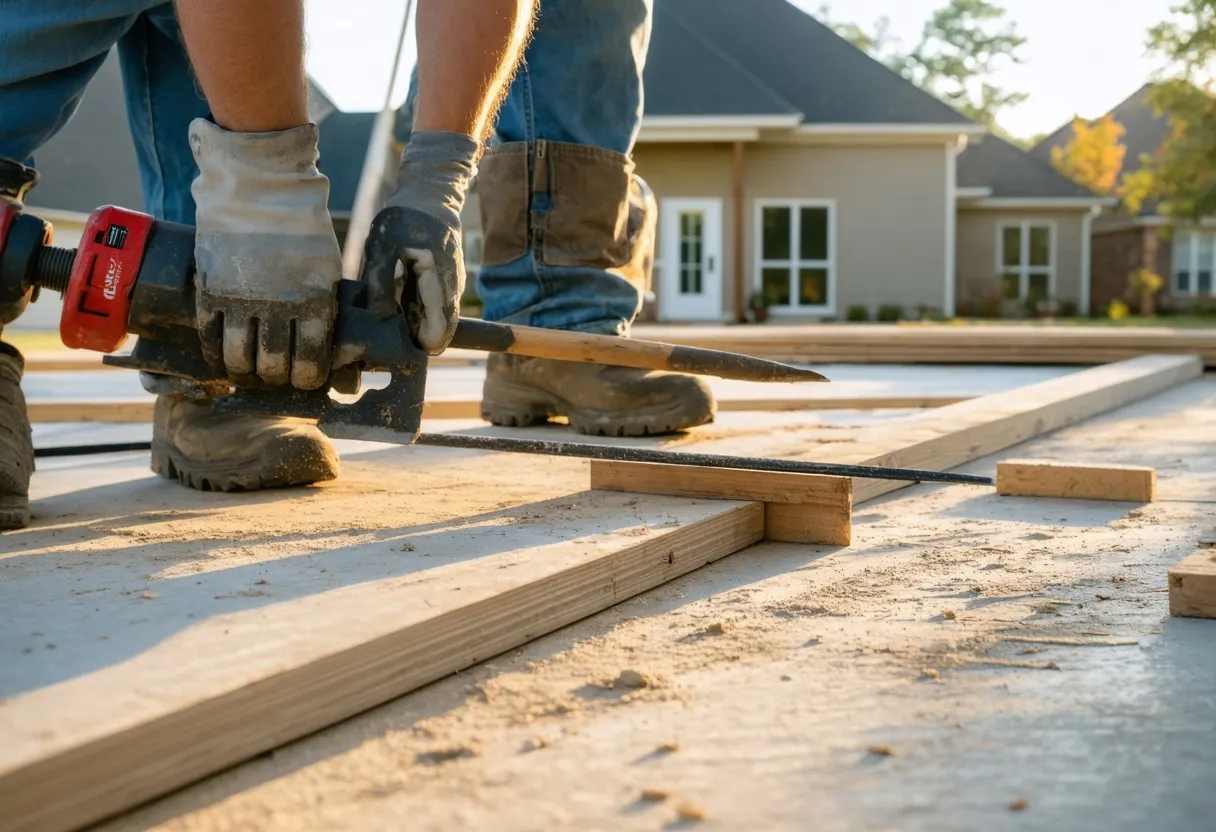
Building a custom home in Tuscaloosa is a different undertaking than buying a spec house off a builder's inventory list. It starts with a lot — one you may already own in Cottondale, one you're eyeing in Northport, or raw acreage further out in Tuscaloosa County — and it ends with a house that was actually designed around that lot, your budget, and the way your family lives. Everything in between (grading and drainage, permitting through the City of Tuscaloosa or the county, framing, trades, finish selections, final inspection) has to be carried by someone who treats it as one continuous project, not a string of handoffs.
That's the case for working with a genuine custom home builder rather than assembling the job yourself trade by trade: one point of contact, one line-item budget you can actually hold someone to, and a process built for West Alabama conditions — including the reality that severe weather is part of building here, and a builder who can document a project cleanly for an insurance claim if a covered loss ever touches it is worth more than one who's never had to think about it.
How to Tell a Real Custom Builder From a Plan-Book Reseller
From First Site Walk to Final Walkthrough
A walk of your specific parcel — grading, soil, drainage, setbacks, and utility access — before a single line gets drawn, whether it's an infill lot inside city limits or acreage in the county with septic and well questions to answer.
Floor plan development or refinement of a design you already have, priced against actual material and finish selections so the budget and the design get built together instead of colliding later.
Applications and approvals through the applicable jurisdiction — City of Tuscaloosa or Tuscaloosa County — plus subcontractor scheduling and a firm contract price before ground is broken.
Foundation through framing, trades, and finish work, with photo and written documentation at each phase so there's a clean record if a warranty question or insurance issue ever comes up later.
Final punch list and a documented, written workmanship warranty at closing — not a verbal assurance you'd have to chase down if something needs attention down the road.
Why Design-Build Matters More in a Storm-Exposed Market
There are two ways a custom home project typically gets structured. In a traditional bid-build arrangement, you hire a designer, get finished plans, then send those plans to competing contractors for bids — two relationships, two sets of miscommunication risk, and a real chance the design assumes a budget the bids won't support. A design-build home contractor in Tuscaloosa handles design and construction under one contract and one accountable team, so cost feedback happens while the design is still flexible, not after it's locked and the numbers don't work.
That matters especially here. West Alabama's severe weather season isn't a footnote — it's a real factor in decisions a catalog builder rarely touches: how a roofline is framed, what exterior materials hold up to wind and hail, where water is directed once it leaves the roof, and how a foundation is detailed for the specific soil on your lot. Folding those decisions into design from day one, rather than retrofitting them after a storm exposes a weak point, is part of what design-build is supposed to deliver.
It also means the same team that designed your home is the team that can document it properly if a covered loss ever enters the picture — during construction or years after move-in. Photo records, line-item estimates that map to how insurance scopes of work are written, and a single point of contact who can talk directly to an adjuster aren't add-ons; they're a natural extension of a design-build process that was already documenting the job carefully.
What Actually Drives Your Number in This Market
"What does a custom home cost in Tuscaloosa?" doesn't have one answer, because cost follows decisions, not square footage alone. Two houses the same size can land in very different places depending on the choices below:
- Lot condition. A cleared, level lot with utilities at the road costs less to build on than a wooded or sloped lot needing grading, retaining walls, or a longer utility run — common on acreage further out in the county.
- Foundation type. Slab, crawlspace, and basement foundations carry different costs, and the soil on your specific lot can push the recommendation one way over another.
- Finish level. Builder-grade fixtures and flooring versus custom cabinetry, stone counters, and upgraded trim can shift a budget substantially without changing the footprint at all.
- Exterior materials and roofline complexity. Brick, fiber cement, and stone accents each carry different labor and material costs, and a more complex roofline adds both framing time and long-term storm exposure to weigh.
- Mechanical systems. HVAC zoning, water heater type, and electrical service size affect upfront cost and what you'll pay to run the house afterward.
- Site work scope. Driveway length, septic versus sewer, well versus municipal water, and drainage work outside the house's footprint — all more likely to factor in on county lots than infill city parcels.
Treat any broad number you see online as a planning range, not a quote. The only accurate figure for your project comes from a site-specific estimate after a lot evaluation — and you should get it in writing, itemized, with a clear explanation of how change orders get priced if the scope shifts once work is underway.
Built to Handle the Paperwork, Not Just the Framing
If a storm, a covered loss during construction, or prior damage on the lot ever brings an insurance claim into your project, the documentation habits are already in place — phased photos, line-item estimates that align with how adjusters read a scope of work, and one point of contact who can speak to a claims representative directly instead of routing you through three different subs.
Custom Home Building in Tuscaloosa: Questions Worth Asking First
Do I need to already own a lot before reaching out?
No — starting the conversation before you've closed on land is usually the better order of operations. A builder can walk a prospective lot's grading, drainage, and utility access with you before you're financially committed to it, in Tuscaloosa, Northport, Cottondale, or elsewhere in the county.
How is a custom build different from buying a spec or production home?
A spec or production home is built from a fixed plan set with limited swaps, often before a buyer is even attached. A true custom build starts from your lot and your list, with the floor plan, finishes, and structural decisions worked out around your budget rather than a catalog.
What areas does this cover besides Tuscaloosa proper?
New home construction here regularly covers Tuscaloosa, Northport across the river, Cottondale to the east, and lots throughout Tuscaloosa County — each with its own permitting path, soil conditions, and considerations like septic and well access outside city limits.
How does financing work alongside a written budget?
Construction loans typically require at least preliminary plans and a line-item cost estimate before terms are finalized. Getting that estimate early, tied to your actual site and selections, keeps the design aligned with what's realistically financeable rather than discovering a mismatch after plans are done.
What if a storm damages the site or a neighboring structure mid-build?
This is exactly where insurance-claim-ready habits matter — photo documentation at each phase, a written scope of work, and direct communication with an adjuster when questions come up, so a claim doesn't stall the schedule or turn into a documentation scramble.
How long does a custom build in this market typically take?
Timeline depends on size, design complexity, permitting jurisdiction, and weather, and can run from several months to over a year. Design-build projects tend to move faster than bid-build because permitting and early site work can often start before every finish selection is locked in.
Get a Written Quote
No pressure, no obligation — just a clear scope and price in writing.
More general contractor services
Ready to Get Your Project Scoped?
Tell us what you're working on and we'll put together a written quote.